
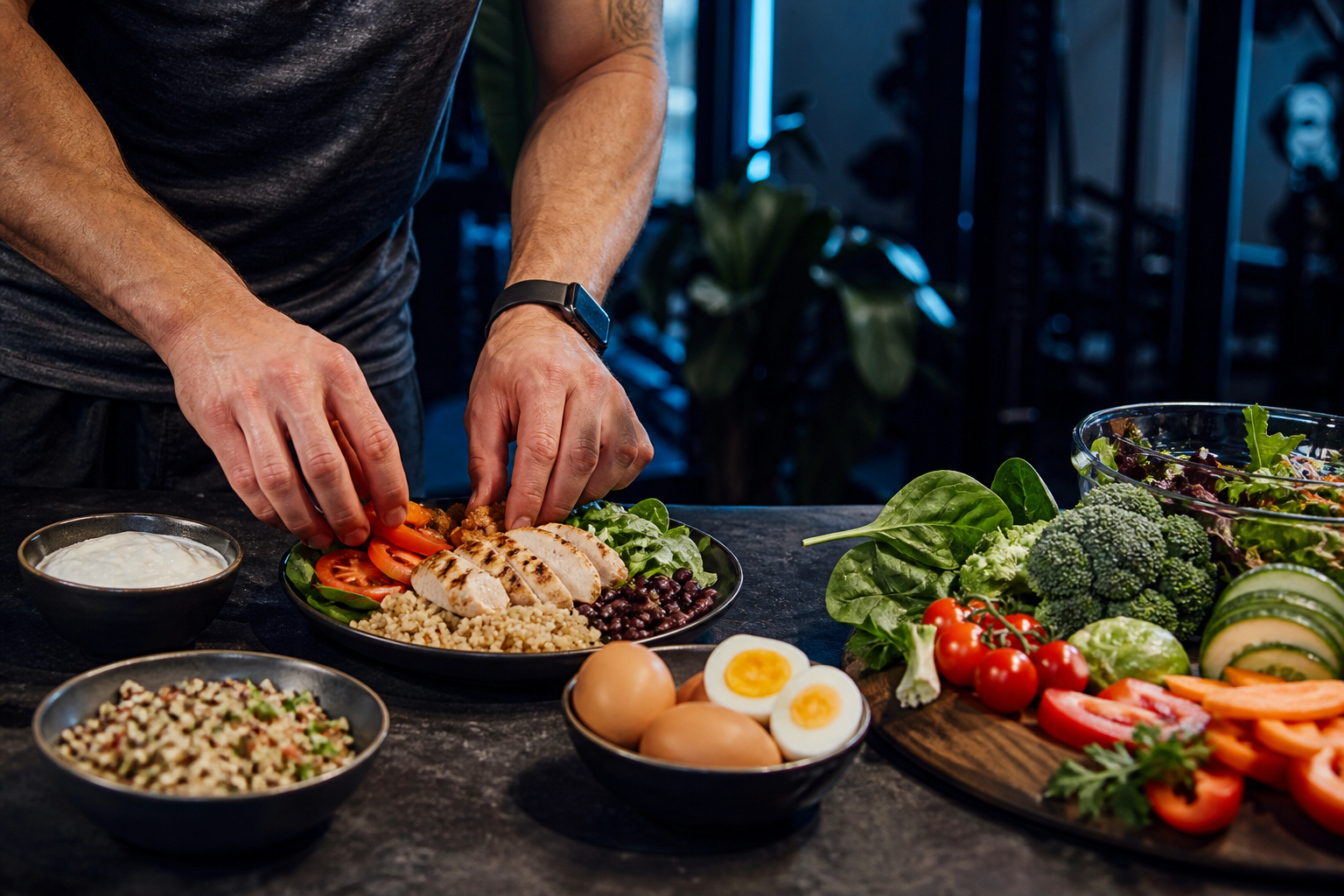
Protein supports muscle repair, strength development and fullness—but you do not need a spreadsheet or an extreme diet to get the basics right.
Build meals around a visible protein source
Start with the food rather than the numbers. Eggs, Greek yoghurt, chicken, fish, lean meat, tofu and beans can all play a role.
- Breakfast: eggs or Greek yoghurt
- Lunch: chicken, tuna, tofu or beans
- Dinner: a palm-sized serving of your preferred protein
- Snack: yoghurt or milk when useful
Spread protein across your day
Three or four useful servings are usually easier to digest and more practical than trying to catch up with one enormous evening meal.
Supplements are convenience, not magic
Protein powder can help when time is tight, but it does not replace a balanced diet. Choose a product you tolerate, keep the serving sensible and let normal meals do most of the work.
Fuel your Bridgend gym sessions properly
Training also needs carbohydrate for energy, fruit and vegetables for micronutrients, and enough fluid. A higher-protein meal can still be a poor recovery meal if everything else is missing. Ask the POWS Gym team for practical guidance that fits your training.